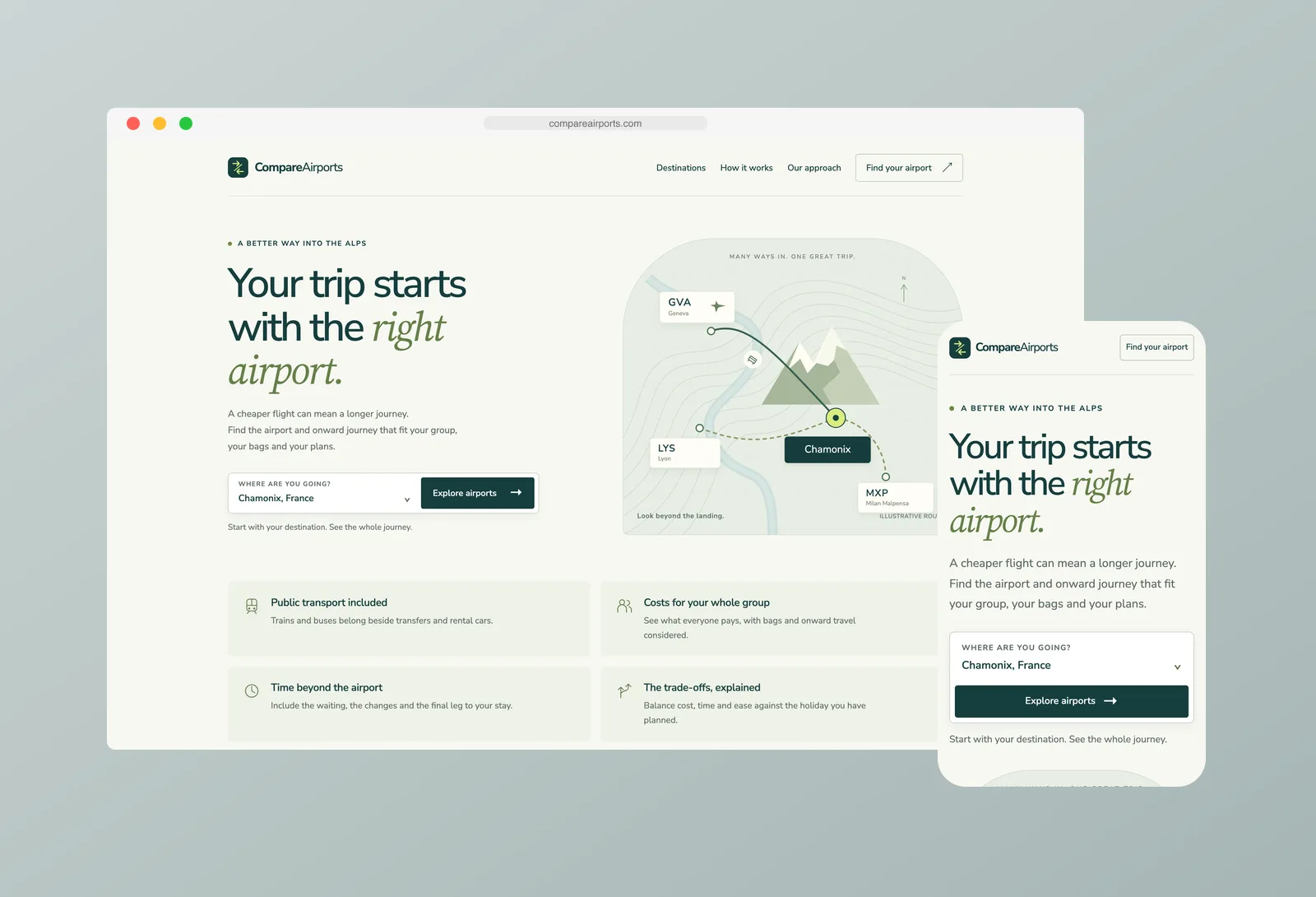
CompareAirports answers the question that comes before booking a flight to the mountains: which airport should I fly into? The cheapest fare often lands furthest from the resort, and the nearest airport can mean a late arrival, three changes and a taxi nobody priced. The site compares the whole journey, from landing to the door of the chalet, for Chamonix, Zermatt, Ortisei and Cortina.
Start with the place, work back to the airport
A region is not a destination, so every page starts from one town. Chamonix is weighed against Geneva, Lyon and Milan Malpensa, Zermatt against Zurich, Geneva and Basel, Ortisei against Bolzano, Innsbruck, Verona and Munich. Each airport sits beside the others with its onward coach, train, transfer or hire car, the time it takes and what it costs for the whole party, one way, on real dates.
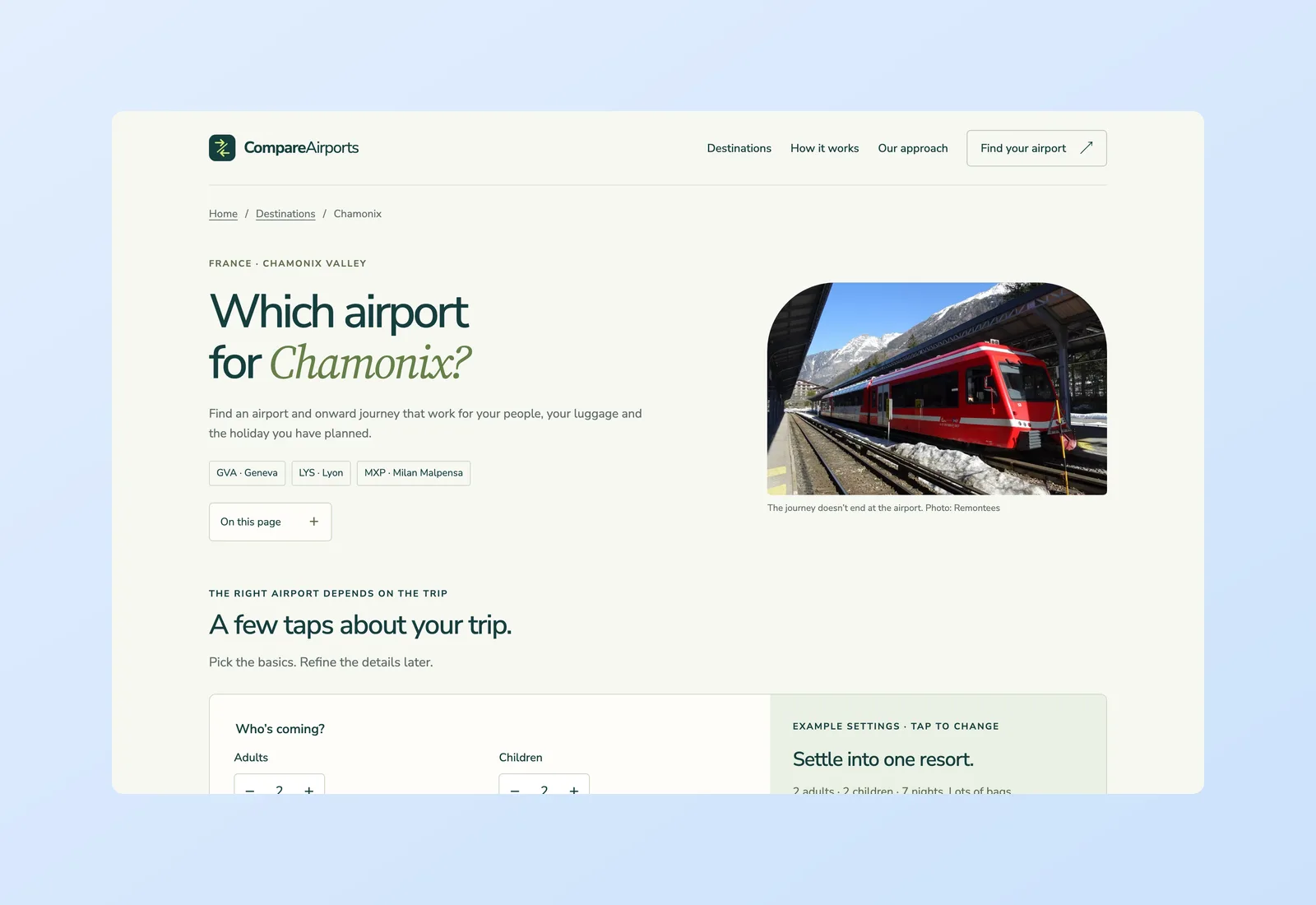
A few taps describe the trip: how many adults and children, how much luggage, how long the stay and whether the plan is one resort or a different valley every day. The page then says what deserves a closer look. Six bags and two children make a direct coach worth more than a cheaper route with changes. A week in one resort rarely earns a hire car.
Every figure has a source and a date
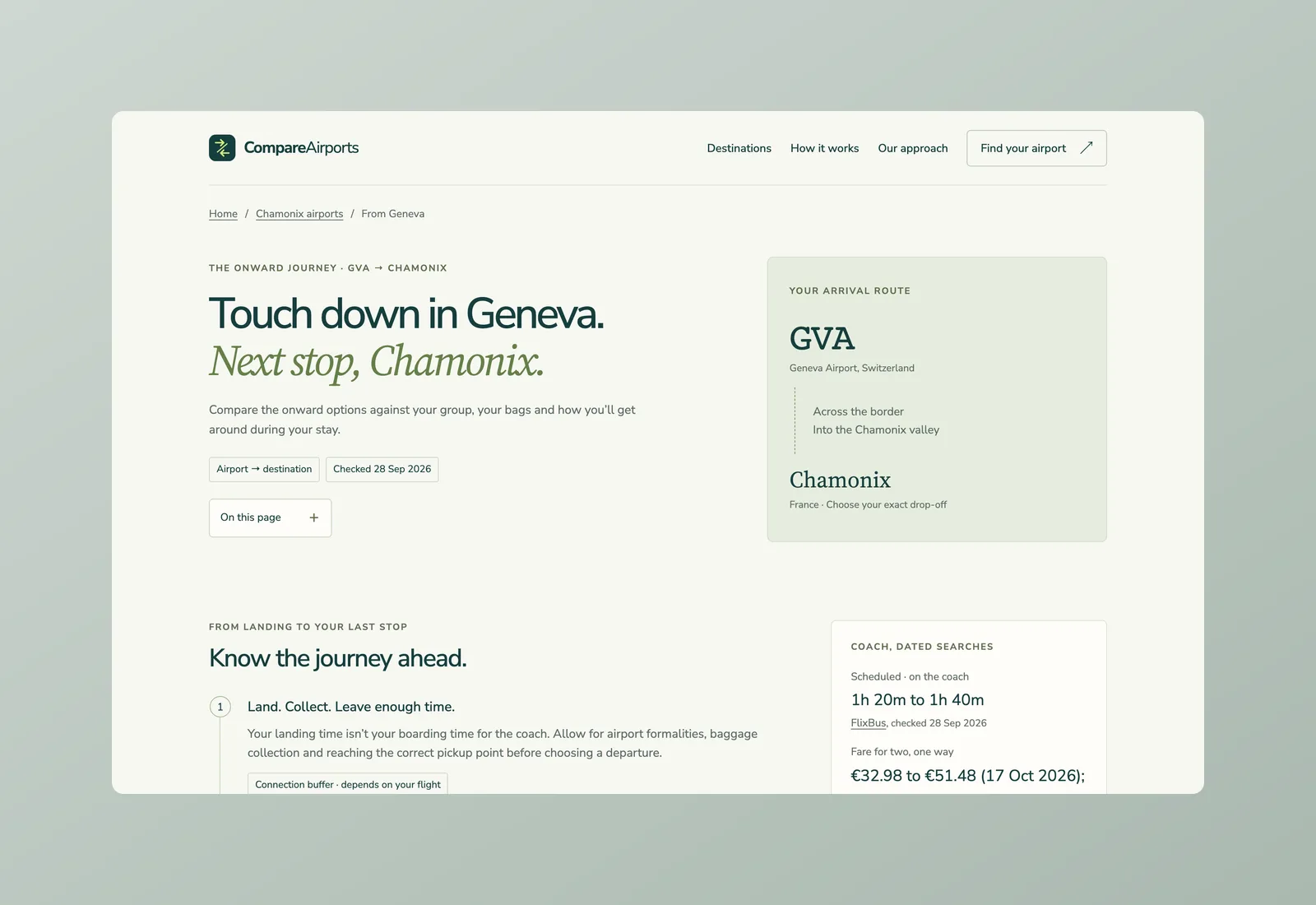
Each fare and journey time names the operator it came from and the day it was checked. A fare is quoted for the actual group, never halved from a return, and an unknown cost is shown as unknown rather than zero. Cost, time and ease are kept side by side instead of blended into a score, because a family with ski bags and a couple travelling light weigh them differently.
Honest about who runs it
CompareAirports is a TransferBnB project, and it says so on the homepage. Trains and buses sit in the same comparison as private transfers, and when the train is the better answer the page says that. A public methodology explains what the numbers are and what they are not, a changelog records every change, and the route data is published as open JSON so anyone can check it.
Built to be the answer that gets quoted
The design is built around an Alpine contour map: a calm palette, a serif for place names and plain type for the numbers, readable on a phone at the arrivals gate. Every page is statically rendered and readable as plain HTML, with the answer in the same place on every destination. That is what search engines and AI assistants look for when someone asks them which airport to choose.
Stack: Astro, Cloudflare Pages, structured data, open JSON route data.