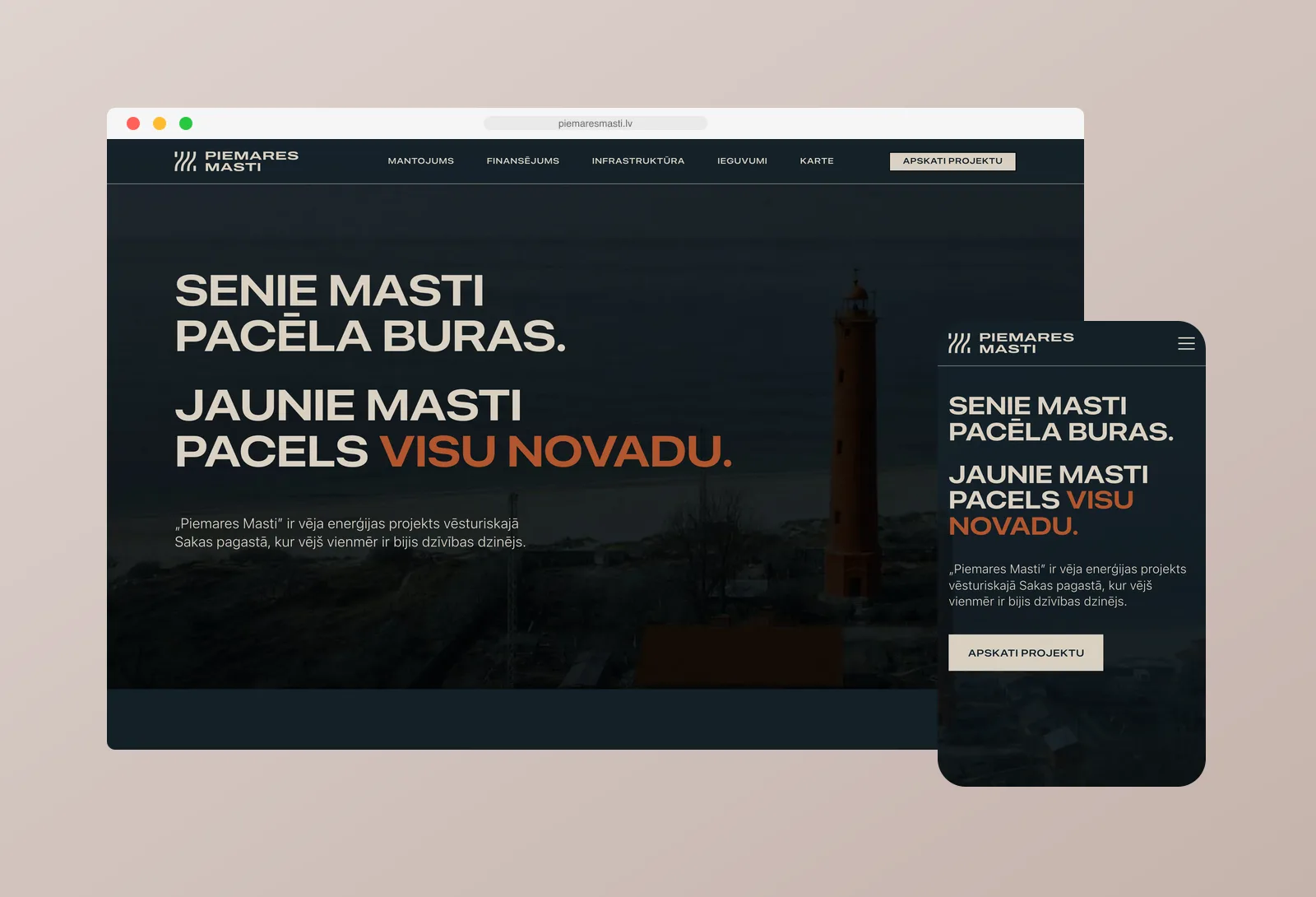
“Piemares Masti” ir vēja enerģijas projekts Kurzemes piekrastē, Sakas pagastā. Vietne ir viena lapa latviešu valodā, un tās uzdevums ir izskaidrot projektu tuvējiem iedzīvotājiem un atbildēt uz iebildumiem, kas viņiem jau ir. Lapu izstrādājām pēc klienta Figma dizaina, tikai latviski.
Katru sadaļu klients pārvalda pats
Vietne ir veidota WordPress uz Bedrock bāzes ar pielāgotu tēmu, ACF Pro un ACF Extended. Katra lapas josla ir atsevišķs elastīgā satura izkārtojums, tāpēc deviņas sākumlapas sadaļas var rediģēt, pārkārtot vai paslēpt wp-admin panelī, neaiztiekot veidnes. Izkārtojumi nosaukti projekta latviskajos vārdos, un sadaļai ir viens nosaukums gan satura pārvaldības sistēmā, gan dizaina failā, gan kodā.
Divas lauku detaļas ir svarīgākas, nekā šķiet. Rindas pārnesumu, ko dizainers izmērījis, klients ieraksta laukā, nevis kodē ar roku. Virsraksta frāzei rūsas krāsā ir savs lauks: redaktors ieraksta vārdus, ko grib izcelt, un sistēma tos atrod pati, tāpēc ar kļūdainu HTML tagu marķējumu sabojāt nevar.
Iebildumu sadaļa ir akordeons “mīti un fakti”, kas pa vienam iziet cauri tipiskajiem apgalvojumiem par vēja parkiem. Visi vietnes teksti ir klienta, un mēs tos publicējām bez izmaiņām.
Karte ir galvenais arguments
Grūtākais jautājums, ko vēja parkam uzdod, ir šāds: kā tas izskatīsies no manas mājas? Tāpēc kartes sadaļa nav ilustrācija, bet atbilde: 52 apsekoti skatu punkti, katrs ar reālu fotogrāfiju, kas uzņemta tieši no tā.
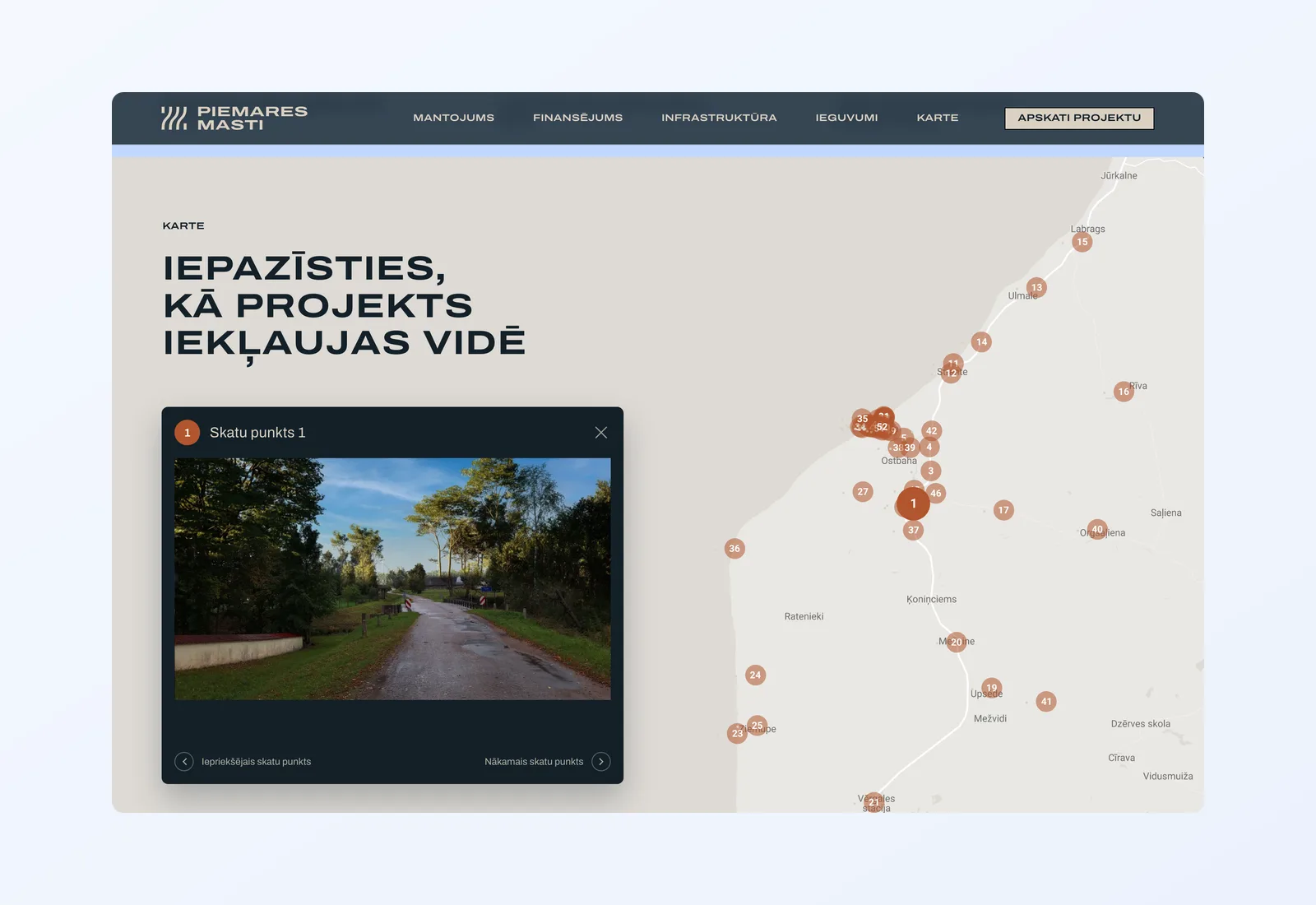
Karte darbojas ar Google Maps JS API, un tās krāsas pielāgojām zīmola paletei. Skatu punkti ir atsevišķs ieraksta tips, un numurētās adatas ir DOM slāņi, nevis kartes marķieri, tāpēc katrai adatai var būt savs numurs un aktīvā adata kļūst lielāka. Klikšķis uz adatas atver kartīti, un kartītē var pāršķirt visus punktus uz priekšu un atpakaļ, ja gribas pārlūkot, nevis meklēt.
Sadaļu apzināti sadalījām tā, lai kartītes puse bez Google vispār iztiktu. Skatu punktus un to fotogrāfijas var pāršķirt arī tāpat, un API atslēga atbloķē tieši divas lietas: pamatkartes attēlus un adatu atrašanās vietas.
Ātra arī tik garā lapā
PageSpeed Insights, mobilajā ierīcē un datorā, 2026. gada augusts.
Maksimālais rezultāts visās četrās kategorijās, lai gan lapā ir fotogrāfija visā ekrāna platumā, interaktīva karte un deviņas joslas. Fonti ir izvietoti mūsu serverī, attēlus WordPress kodols pasniedz WebP formātā, un CSS ir iekļauts lapā.
Tehnoloģijas: WordPress (Bedrock, pārvaldīts ar Composer), ACF Pro un ACF Extended, Tailwind CSS ar esbuild, Google Maps JS API.